Posts

Is Your Citrine Actually Citrine?
Image
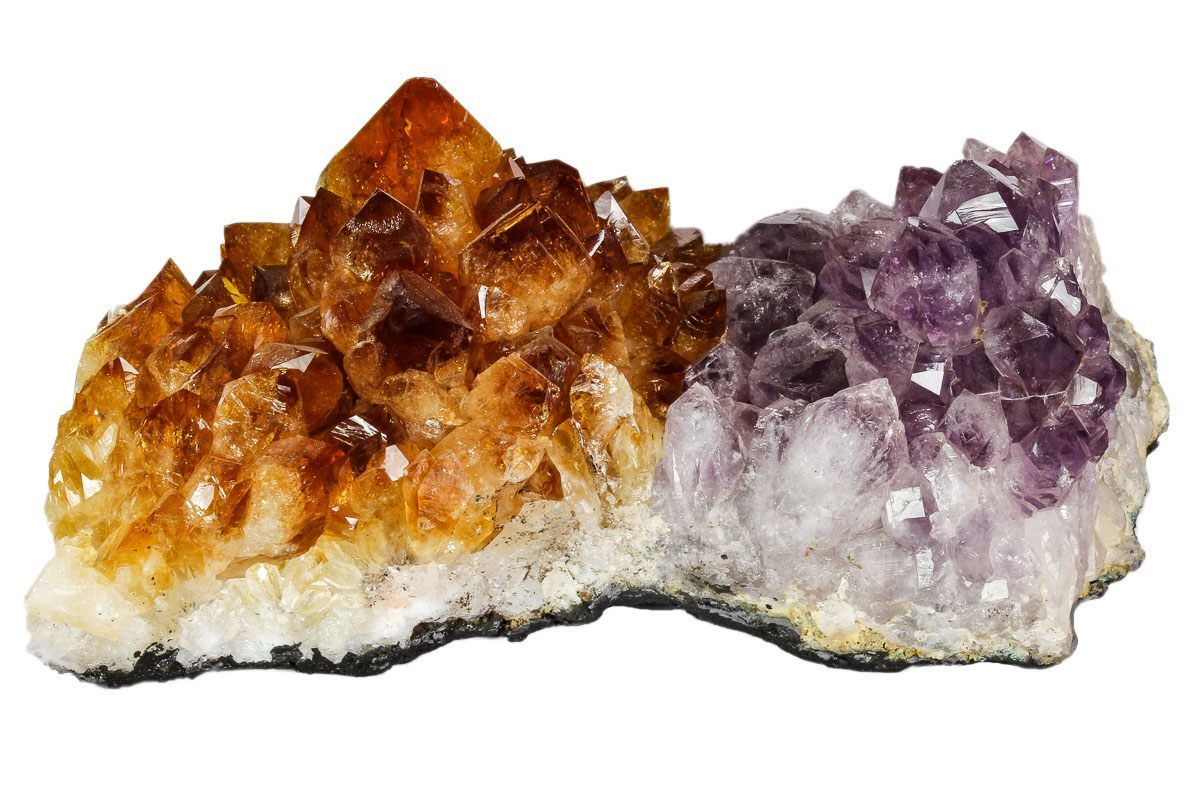
 Is Your Citrine Actually Citrine? A Look Into How You Can Tell  if  Your Citrine  is Heat-Treated     What does quartz, amethyst, and citrine all have to do in common? Well, all three are varieties of quartz. Quartz can be found worldwide, but amethyst and citrine are located in certain locations. Citrine is usually found in Brazil, Madagascar, and Russia. Citrine occurs in the same environment as smoky quartz, mostly intrusive igneous minerals which have traces of radioactive elements, whose radiation cause the coloration. But, you can find fake citrine almost everywhere, from online stores to local mineral shops. I, unfortunately, have been a victim of the fake citrine market. F ake citrines are scattered everywhere. Every citrine that you see on the market that are either a light orange or deep orange with the color stopping halfway through the crystal is fake.      These fake citrines are created by applying heat to amethyst crystals....
Cave of the Crystals

Image
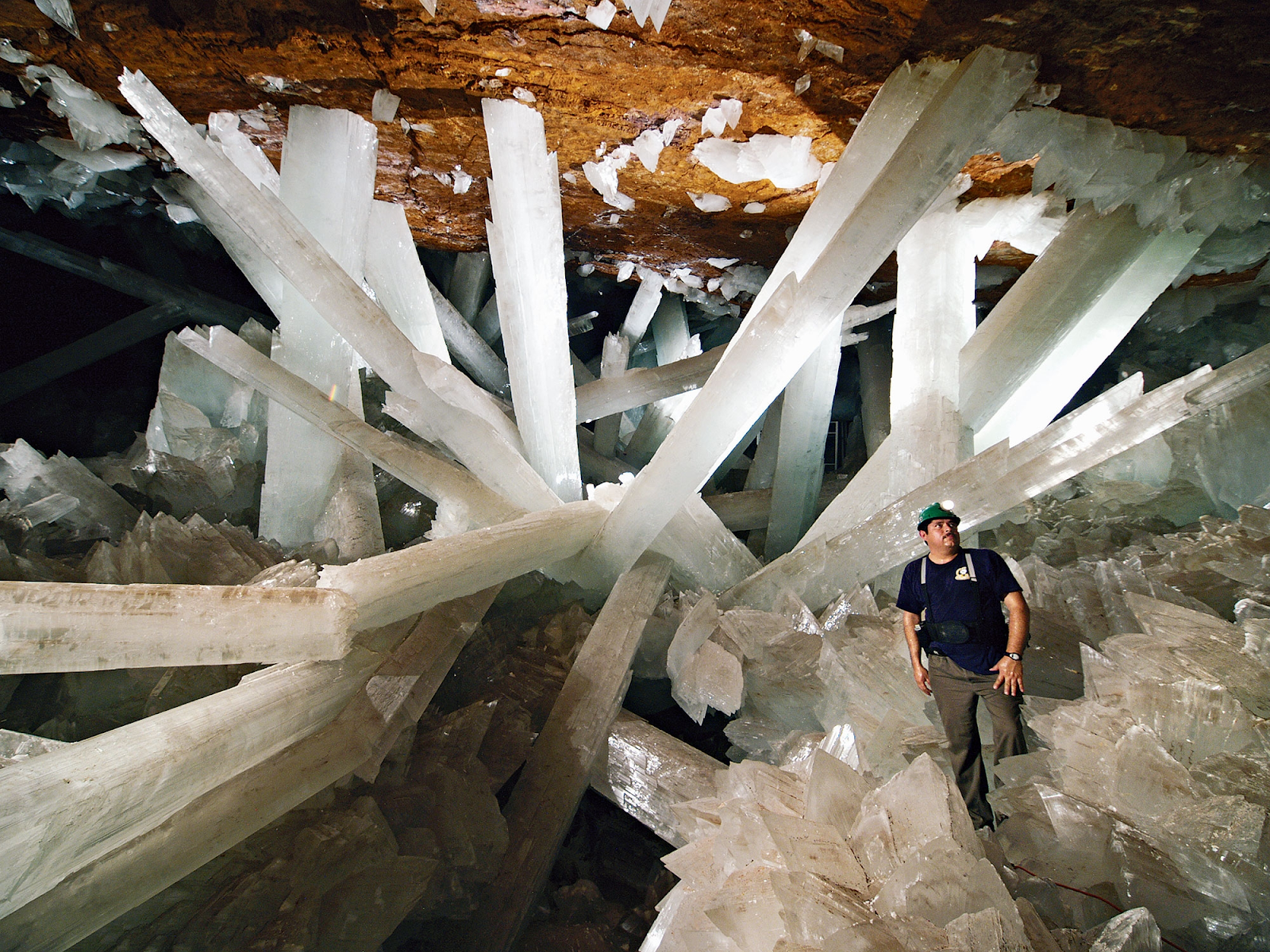
The Cave of the Crystals      The Cave of the Crystals is a cave with naturally occurring cave with massive selenite crystals, some can grow up to 4 feet in diameter, and 50 feet long. The Cave of the Crystals is located in Naica, Chihuahua, Mexico. Naica is on a very old fault. where underground magma chambers live under the cave. The magma heats groundwater that is filled with minerals, including lots of selenite. The hollow cave was filled with this hot mineral-rich water and remained that way for half a million years. Over those half a million years, the temperature of the water stayed constant at over 122 degrees Fahrenheit, allowing the selenite crystals to grow so large.      Modern-day mining technology allowed humans to witness this natural wonder by pumping water out of the 30-foot by 90-foot cave which was found in the year 2000. A scientific team explored the cave in detail in 2006, to survive and be able to work in the extremely humid, and high...

Trilobite Conga Lines

Image
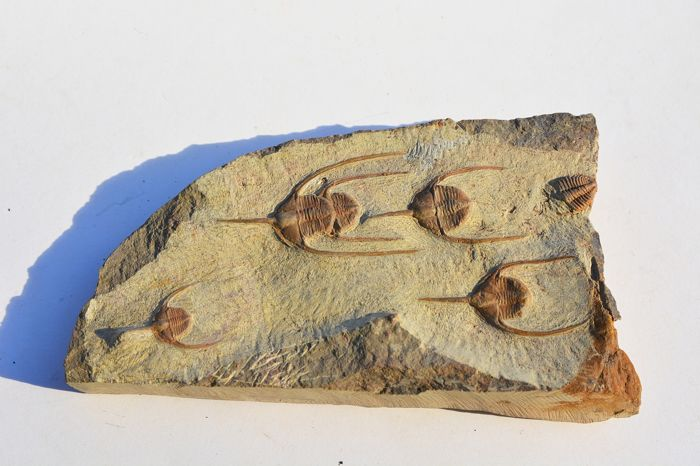
  Trilobite Conga Lines      The trilobites were ancient Cambrian arthropods. Their fossils can be found worldwide due to how abundant they were before they went extinct. They thrived from the Cambrian Explosion, where life rapidly evolved to the Devonian era.      Trilobites were one of the most successful early animals, existing for almost 300 million years. The trilobites went extinct around 250 million years ago in the end-Permian extinction. There were many different types of trilobites spanning their 300 million year reign. Different trilobites had different lifestyles, as it is thought that some moved over the seabeds as predators, and others were filter-feeders and scavengers. Most trilobites swam and crawled for transportation, but it is thought that some could have crawled on land. Some even believe it's possible that some species of trilobites moved in herds that looked like conga lines. Trilobite Herds     As stated before, t rilo...

Geodes

Image
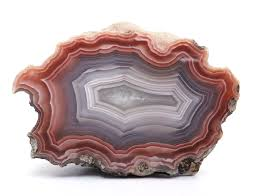
All About Geodes What Are Geodes?      G eodes are often hollow, spherical minerals filled with crystals. Geodes are referred to as "Variable Phenomenon",which means that there are many different ways they can be formed.  "Geode" derives  from the Greek word "Geoides", meaning "earthlike". Geodes are hollow, round rocks lined with crystals. Sometimes, nodules can be often mistaken with geodes. Despite them being nearly the same, the difference between the two is that nodules are completely filled with crystals, whilst geodes are hollow and lined with crystals. A Nodule How Are Geodes Formed?      Geodes most often start as bubbles in volcanic rock, but can also be created from tree roots or animal burrows in sedimentary rock. Other times, the cavity could form because of a fossil being dissolved, or from decaying organic matter that leaves a gaseous pocket.       Over time, the shell of the geode hardens, and water that contain...

Is Your Amber Real?

Image
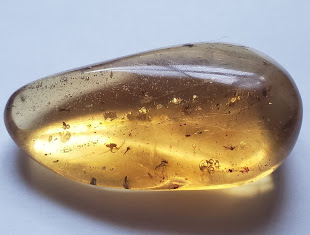
Is Your Amber Real? How To Identify Faux Amber From Real Amber      Before we can talk about identifying  real and fake amber,  we have to  know what amber is in the first place. Amber is fossilized tree resin, which became a fossil after millions of years. Amber can come in  different colors and shades, and some even have some inclusions.  My piece of amber with insect inclusions Inclusions in amber are usually referred to as different animals and insects inside the piece. If you look at the attached photo, you can make out some dark spots. Those dark spots are different small insects such as mosquitos and spiders that were  trapped in the amber, and stayed preserved inside. People have found pieces of amber with animals ranging from snakes to frogs. Those pieces are extremely expensive. If you were to spend a ton on a piece of amber with an animal inclusion, you'd want it to be real, right? Identifying Real Amber From Faux Amber  ...

Mystery Mineral

Image
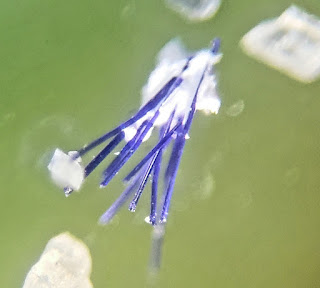
  Mystery Mineral           Years ago, my family and I went to a local fossil and mineral store.  I frequent this store every month and buy a couple minerals and fossils each time, as they have new items every time I go.  This store has many different attractions.  One of which was a "Gold Dig", where you panned for small pieces of Pyrite, and another which was a "mine your own minerals" activity where you sift through sand/gravel to find different minerals such as Quartz, Calcite, Fluorites, Agates, and an assortment of different tumbled stones.  I've held onto these minerals for a couple years, and a few months back I decided to look at the mineral dust that collected at the bottom of the plastic bucket under a microscope.       One peculiar mineral I discovered at the bottom was this.   Sorry for the low quality, this photo was taken on my phone through my microscope.  Since I  took the pho...

A Brief Spotlight on the Tiktaalik Roseae

Image
The Tiktaalik      The Tiktaalik was a late Devonian era fish that had lungs, a neck that could move, a tetrapod type ribcage, along with fins, scales, and gills. Since the Tiktaalik has components from both land and water animals, this would make it a transitional fossil. People think that the Tiktaalik probably crawled in the sand and muck of shallow freshwater habitats such as swamps, ponds, and lakes. But, people also think that they used their leg-like fins to crawl on land.  The name 'Tiktaalik roseae' comes from a benefactor of the research that helped find Tiktaalik fossils in a part Northern Canada back in 2004. The Tiktaalik finds were made up of some nearly complete fossilized skeletons, and a couple dozen partial skeletons. A partial Tiktaalik skeleton     Tiktaalik's were usually about 3 to 10 feet in length, and were probably a predator in their habitats, most likely eating fish and small arthropods. The Tiktaaliks were most likely related to ...